My Thoughts on UFO Disclosure (And Those It Will Most Impact)

I’ve been waiting for ET & UFO disclosure for most of my life now.

I’m old enough (feels weird to say) to remember when Obama was supposed to disclose ETs circa 2009. Since the days of perusing the Above Top Secret forum in high school, whispers of official “disclosure” have always placed it at right around the corner, a sort of saving grace for those in the UFO community, a foretold redemption for those whose friends and family might view them as crazy.

Since then, I’ve learned that disclosure is very much an individual, often painful journey of discovering truth within yourself, deconstructing layers of old belief systems to perceive more of reality. We don’t need to wait for the government to tell us what is real. Nor should we care what any other person thinks, for that matter.

I’ve also learned that there are many people in this world who will not believe anything unless it comes from an “official” external source, even though these same sources — whether governments, mainstream media outlets, or church leaders — have been participating in the deceitful coverup and perception manipulation for decades, often in conjunction with the intelligence agencies.

For most of these people, some sort of official acknowledgement is needed that we are not alone in the universe — that there are beings here visiting from other planets, other dimensions, possibly even from beneath our feet. We have been swimming about a tiny fish tank, made to believe it was our whole reality.

In general, I see two categories of people whose belief systems will be shattered by a hypothetical disclosure.

The first are your classic dogmatic religious people, who are made to believe that beings from other planets or dimensions, or anything outside their narrow box, are demonic. I’m not saying that there isn’t a “demonic” element to our world (it would explain a lot, actually). But the worldviews of a surprising amount of people in the online Christian community have devolved to the point where they believe that space and other planets are “fake” (in my mind, a purposeful psychological operation in conjunction with flat earth theory), a perfect way to continue the 80-year coverup and get people arguing over nonsense.

Open-minded Christians (and other religious people) who can see that ETs, UFOs, and interdimensional beings are mentioned everywhere in holy texts, even littered throughout religious artwork/iconography (a few examples of which I’m attaching), will have a much easier time. They will accept the obvious truth that God made a vast universe filled with a multitude of intelligent expressions. Anything less (space is fake) is a disservice to his creation.

Read more
Battle For Disclosure: The Biggest Secret in Human History

There is perhaps no greater wisdom that can be found once you gain the ability to be still with yourself, and observe the natural world around you. In the age of distraction, it is all too easy to lose sight of the miracle of creation, and the sense of wonder that it can inspire within you.

The trees may teach us about being rooted in stillness. The rivers may show us the wisdom of formlessness, letting our thoughts flow as effortlessly as water. The leaves of autumn teach us of change and letting go. And the stars above us may generate awe and humility at a glimpse of a greater universe seemingly interwoven by the divine; a complex magnificence that our feeble human minds cannot even begin to comprehend.

There is a reason why Albert Einstein was once quoted as saying, “Look deep into nature, and then you will understand everything better.” For he was indeed humbled at this finite glimpse of the “orderly harmony of all that exists,” sparking within him a sense of cosmic religiosity.

It is obvious that this humility has been sorely lacking from the collective psyche of our modern society, where we are ruled by the malfunction of our minds and ego identities, and science is so often stifled by its own hubris. This has manifested in countless forms throughout history, and although humanity no longer believes that they are at the center of the universe, many are still possessed by a delusion perhaps equally as insane—that consciousness on Earth is a cosmic accident (at least from the prevailing scientific perspective), hence we may very well be the only intelligent life that exists in the cosmos.

It is a delusion that is believed by even several top scientists, despite surely being a statistical impossibility given the hundreds of billions of stars in our galaxy alone. Recent estimates suggest that the Milky Way could be home to six billion Earth-like planets! (Before the 1990s, scientists weren’t even sure if there were any exoplanets orbiting other stars due to the remarkable conditions through which they exist). It gets even more humbling when you consider the very real possibility of alternate dimensions, and the extremely limited band of visible light that humans can actually see.

We wander about the surface of a tiny planet at the edge of a (relatively) small galaxy, unable to peer beyond our acutely narrow band of perceptual frequency.

As was espoused by Plato in his writings of Socrates, there is no progress when we think we know everything. Only once we let go of the illusion of knowing—discarding everything we think we know—can a true foundation of wisdom begin in its place, one not rooted in ego or mental conditioning but rather in a deeper sense of being.

Next time you find yourself out in nature, consider that there are beings observing us in the same way that we might view ducks in a small pond, floating about a tiny radius, completely oblivious to a larger reality. Perhaps even fish in a forest stream. Or ants in an ant colony, hidden beneath a tree. Indeed, it may very well be arrogant to think otherwise.

Hence, for the purposes of this article, let us assume we know nothing.

Read more

The Real X-Files: Dr. John Mack & The Children of Ruwa

“If there are super-intelligent aliens out there, they’re probably already observing us—that would seem quite likely—and we’re just not smart enough to realize it.”

-Elon Musk, founder of Tesla & SpaceX, Dubai World Government Summit (2017)

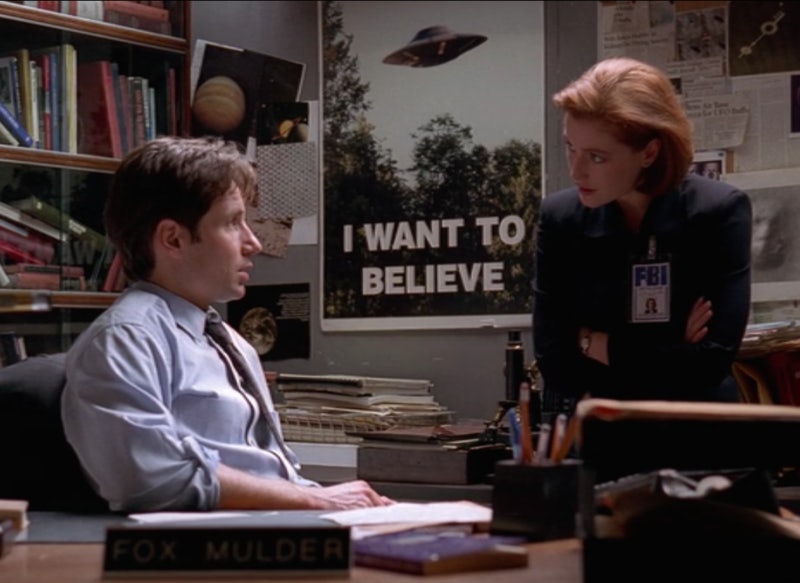
“I Want To Believe.”

This slogan is displayed prominently on a poster above Fox Mulder’s desk in the pilot episode of The X-Files, which went on to become a cultural phenomenon. The show followed two FBI agents as they investigated ETs and the paranormal. It was Agent Mulder who was the open-minded one, counterbalanced by the skeptical Scully, who was always questioning her partner’s “spooky” theories.

It was Agent Mulder, however, who turned out to be correct, as we later learn from a high-level government insider: “they’ve been here for a long, long time.”

Image result for fox mulder i want to believe poster

As a child of the ’90s, it was easy to admire someone like Mulder, enamored by his virtue, bravery, and yes, his willingness to believe. Even through a TV screen, his fervor for the unadulterated truth was contagious indeed, sparking something latent in my young heart and setting it ablaze. Soon, I wanted to believe too.

It wasn’t until my early teenage years, after stumbling across a documentary on the Roswell crash, that I realized there might be something more to this than just belief. There were deathbed confessionals, after all, from top military officials! There were leaked photos of an alleged alien autopsy! Unbelievably, there was even an “alien interview” with a creepy-looking black-eyed being on YouTube!!

“Why aren’t people freaking out over this?!” I wondered. “This is the real X-Files!”

Luckily, once you dig through so much BS you’re bound to find a critical mind. So after researching this topic for over a decade, I recognize that the large majority of stuff on the internet is complete misinformation (perhaps deliberate disinformation), coming to appreciate the skeptical mind of Scully after all.

However, there are several cases that I consider diamonds in the rough, ones we should study thoroughly and take very seriously. These cases lend validity to the idea that we are being visited by creatures from another planet—possibly, even, “for a long, long time.” Hence leads me to the creation of a series I will aptly title “The Real X-Files,” exploring the best evidence I’ve come across for ET life.

In this first installment, we analyze the groundbreaking work of Dr. John Mack, particularly delving into the extraordinary case of the children of Ruwa, Zimbabwe. So open your mind, come along on this journey, and leave everything you thought you knew about reality behind . . .

“The alien abduction experiences themselves are often initially quite frightening. Yet over time many experiencers form a powerful bond with one or more of these beings. People become deeply connected with these entities.

“They have palpable experiences that are just as powerful, sometimes more powerful, than relationships here. They view them not just as these cold, calculating, indifferent big-eyed creatures, but bonds develop between experiencers and those strange creatures which often has an intense, transcendent, spiritual, sometimes even erotic, element to it.

“. . . [They] are coming now ‘because they are conscious that we as human beings on this planet are destroying ourselves, and they love us and wouldn’t see this happening.’ They are trying to influence us by bringing knowledge and understanding of our connection to each other and to the Earth and a reminder that ‘we are just one part of a big, big whole.'”

-Dr. John Mack, speech at Seven Stars Bookstore (2000)

There was a Time When John E. Mack was an Academic Superstar.

He was a force in developmental psychology. In 1977, he was awarded the Pulitzer Prize for his book A Prince of Our Disorder. That same year, he became department head at Harvard Medical School, specializing in child psychiatry, where he was well-respected throughout the entire university. He interviewed US presidents. He was a prominent voice of nuclear disarmament. And in 1985, he was part of an organization that was given the Nobel Peace Prize, teaming up with other intellectuals who shared this same view.

John Mack was a man who could have played it safe. He could have lived a long and comfortable life, emboldened by his wealth and academic stature. All that changed by the turn of the ’90s, when he did something so unspeakable for a man in his position it shattered his reputation among colleagues:

He began taking cases of UFO contactees seriously.

Read more